If you live in Southern Africa, you have probably heard the term SADC mentioned in the news, business discussions or political conversations. What exactly is SADC and why is it important?
SADC stands for the Southern African Development Community, a regional organisation that brings together 16 countries across Southern Africa. At its heart, SADC is about countries working together to create a stronger, more peaceful and more prosperous region. From trade and investment, tourism, infrastructure, agriculture, energy and regional security, SADC plays an important role in shaping how countries in Southern Africa cooperate and respond to shared challenges.
The story of SADC began in 1980, when Southern African countries established the Southern African Development Co-ordination Conference, known as SADCC. The organisation was created at a time when countries in the region were seeking greater economic cooperation and independence. As Southern Africa’s political and economic landscape changed, so did the organisation.
In 1992, SADCC was transformed into the Southern African Development Community or SADC. This marked a new chapter with a stronger focus on regional integration, economic development and cooperation. More than three decades later, the idea behind SADC remains relevant: countries can achieve more when they work together.
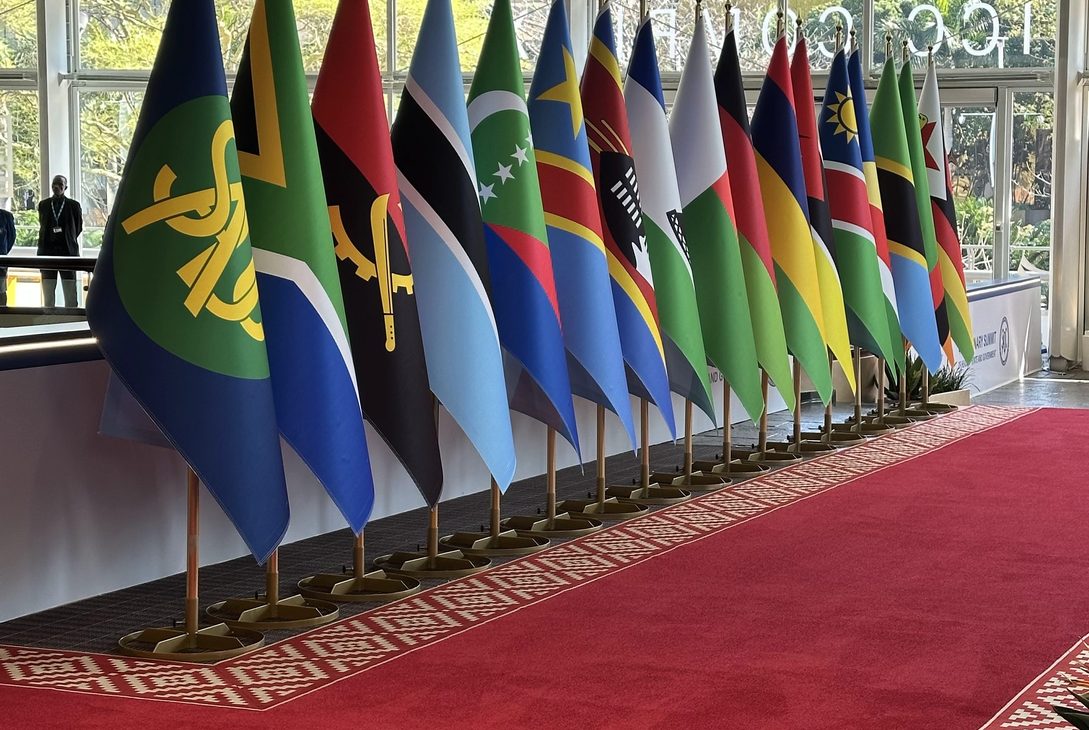
SADC currently consists of 16 member states: Angola, Botswana, Comoros, the Democratic Republic of the Congo, Eswatini, Lesotho, Madagascar, Malawi, Mauritius, Mozambique, Namibia, Seychelles, South Africa, Tanzania, Zambia and Zimbabwe. These countries are remarkably diverse. They differ in size, population, natural resources, languages, cultures and economic strengths. Yet they share a geographical region and many of the opportunities and challenges that come with it. That shared connection is what makes regional cooperation so important.
SADC provides a platform for member countries to cooperate on issues that affect the region as a whole. Some challenges do not stop at national borders.
Think about a truck transporting goods from one country to another. Its journey can involve several borders, roads, customs systems and regulations. The same applies to electricity, agriculture, tourism, environmental challenges, food security and regional security. By working together, countries can coordinate policies, share knowledge and develop solutions that benefit the wider region.
SADC’s broader objectives include promoting sustainable economic growth, reducing poverty, improving the quality of life of people in the region and maintaining peace and stability.
One of SADC’s most important areas of work is regional trade. The establishment of the SADC Free Trade Area was a significant step towards strengthening economic connections between member states. The idea is straightforward: by reducing barriers to trade, countries can make it easier for businesses to sell their products and services across the region. For businesses, this can open the door to new markets. A company does not necessarily have to think only about customers in its home country. The wider Southern African market can offer opportunities for expansion, partnerships and investment. For consumers, stronger regional trade can contribute to greater choice and access to goods and services. Ofcourse doing business across borders is not always simple. Differences in regulations, infrastructure, customs processes and transport costs can still create challenges but regional integration continues to be an important goal.
While economic development is a major part of SADC’s work, the organisation is about much more than trade. Peace and security are also central to its mission.
A stable region creates a stronger foundation for businesses, communities and economies to grow. SADC therefore works with member states on issues relating to peace, security, political stability and regional cooperation. This is particularly important because what happens in one country can sometimes have an impact beyond its borders. Regional cooperation allows countries to work together when challenges affect more than one nation.
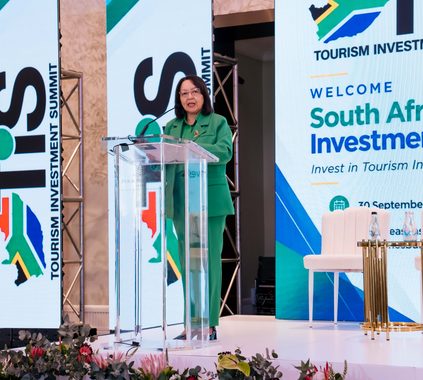
Tourism is another area where Southern Africa has tremendous potential.
The region is home to extraordinary wildlife, beautiful coastlines, vibrant cities, cultural heritage and some of the world’s most spectacular natural landscapes.
From safari experiences and mountain adventures to island getaways and cultural journeys, Southern Africa offers something for almost every type of traveller. Regional cooperation can help position Southern Africa not simply as a collection of individual destination but as a connected region with a diverse range of experiences.
Imagine a traveller visiting South Africa for a safari, continuing to Victoria Falls, relaxing on the beaches of Mozambique and exploring another Southern African destination before heading home. That is the kind of regional tourism opportunity that greater connectivity can support.
It is easy to hear the word SADC and think of government meetings, ministers and regional summits. But ultimately, SADC is about people.
Better regional infrastructure can make it easier to move people and goods.
Improved trade can create opportunities for businesses. Energy cooperation can support economic activity. Agricultural cooperation can contribute to food security.
Tourism can create employment and support local communities and regional cooperation on peace and security can help create a more stable environment for people to live and work. In this sense, SADC is not simply an organisation for governments. Its work has the potential to influence the everyday lives and opportunities of people throughout Southern Africa.
Southern Africa has enormous potential. The region is rich in natural resources and has strong opportunities in tourism, agriculture, mining, manufacturing, infrastructure, renewable energy and technology. At the same time, the region faces challenges including unemployment, poverty, inequality, climate change, energy constraints and infrastructure gaps. These are complex issues and no single country can necessarily solve all of them alone. This is where regional cooperation becomes increasingly important. By sharing knowledge, coordinating efforts and creating stronger economic connections, SADC member states have an opportunity to build a region that is more connected, resilient and prosperous.
So, what is SADC? In simple terms, SADC is a community of Southern African countries working together towards a shared future. It is about recognising that while each country has its own identity, priorities and challenges, there are also many opportunities that can be better achieved through cooperation. The road ahead will not always be easy but the potential is significant. From trade and tourism to infrastructure, technology and regional development, there are countless opportunities to strengthen connections across Southern Africa and perhaps the simplest way to understand SADC is this: Different countries. Diverse cultures. Shared challenges. One region and a shared opportunity to build a better future together.