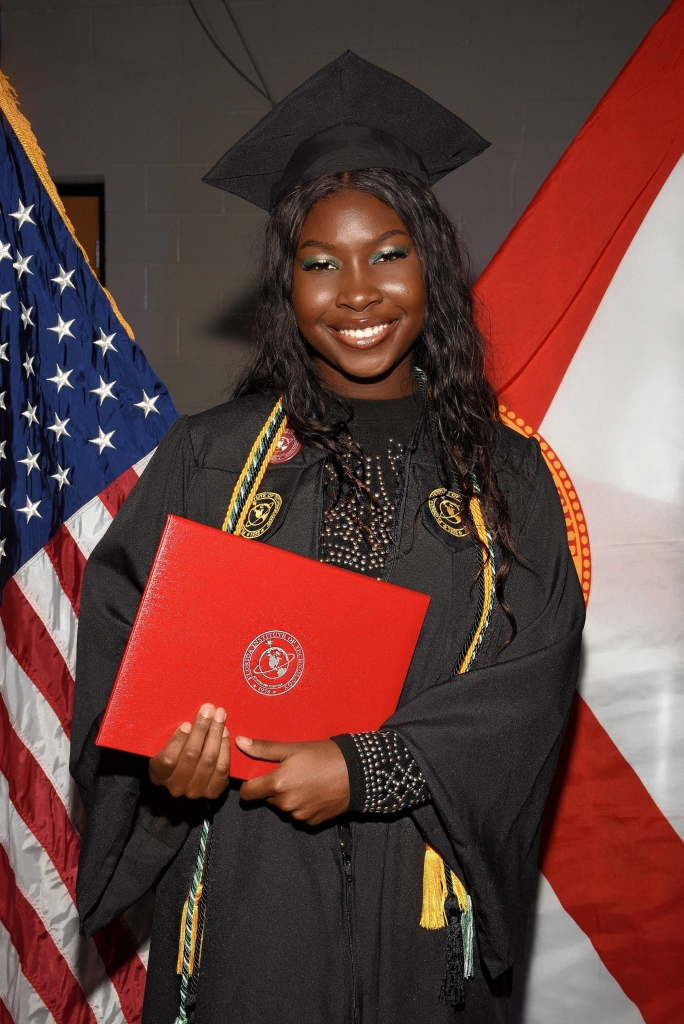
Born in Lagos, Nigeria, and raised in the vibrant city of Johannesburg, South Africa, Nicole’s journey has always defied the ordinary. From her early school days through university at the University of the Witwatersrand (Wits) she thrived both academically and socially, soaking up the energy of Jozi while building a foundation for a career in aviation.
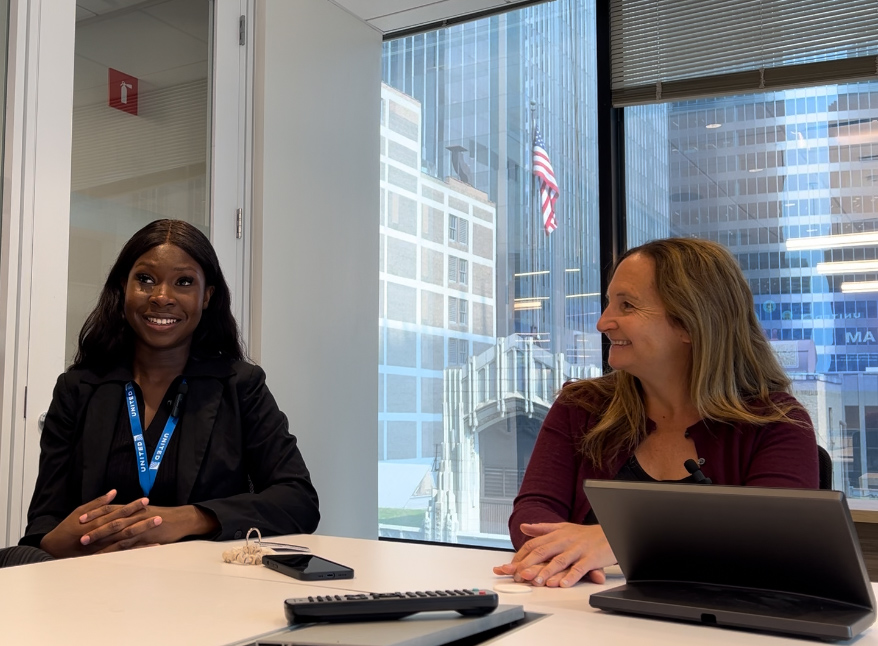
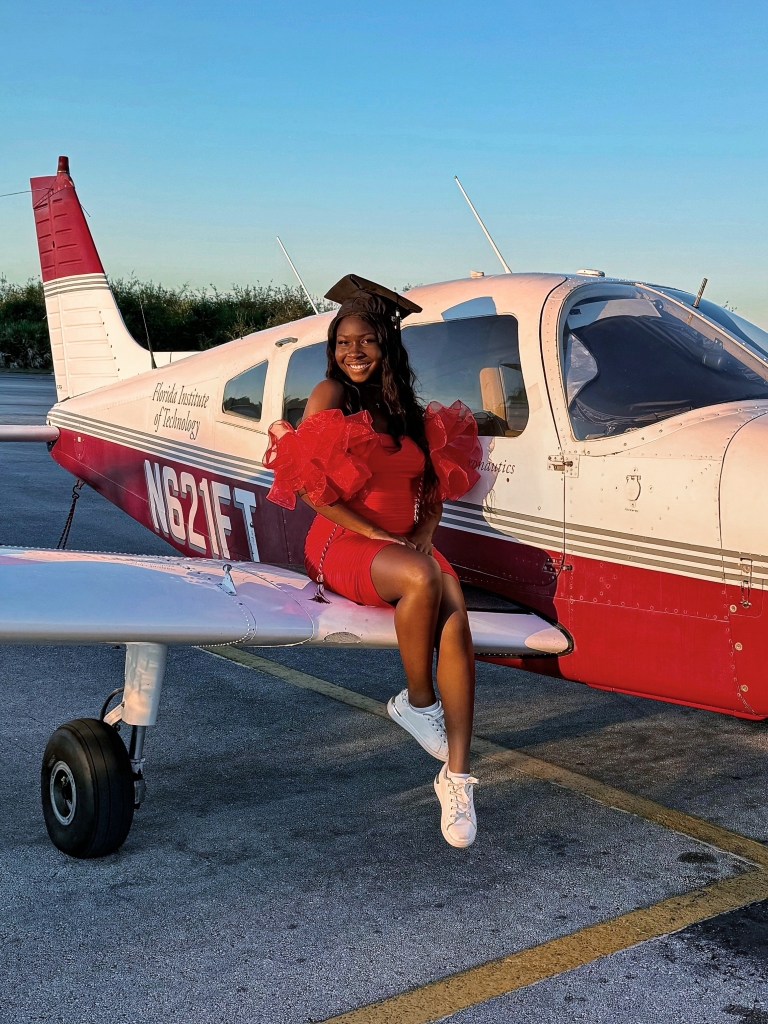
Determined to reach new heights, she moved to Florida (USA) to earn her Commercial Multi-Engine Pilot License at Florida Tech. Her aviation journey then took her to Chicago, where she worked at United Airlines’ headquarters, gaining valuable industry experience. Now based in Dallas, Texas, Nicole works as a Certified Flight Instructor, training the next generation of pilots and inspiring others to pursue their dreams in the skies. Despite her busy schedule, she makes it a point to return to Jozi every year reconnecting with family, dancing with friends, and staying true to her roots. Nicole is more than a pilot, she’s a global citizen, a mentor, and a fearless force in aviation.
Take us through your journey as a pilot briefly.
Nicky: My path as a pilot has been anything but straight and nothing short of transformative. I started on a completely different path—doing commercials for brands like Nando’s, Standard Bank, and Ovaltine, which even aired on Nickelodeon. Eventually, I chose a safer route and pursued a Bachelor of Commerce at Wits. Wits was great, but I felt an itch to dream bigger. So, after getting my parents on board, I moved to the U.S. and began aviation training at Florida Tech. There, I earned my Bachelor of Science in Aviation Management, my Multi-Engine Commercial Pilot License, and a wealth of work experience. My current job involves training other pilots to earn their licenses. So far, it’s been the most rewarding and challenging role I’ve had. Being an instructor has sharpened my skills more than I could’ve imagined—plus, the office views are amazing!
Who inspired your journey?
Nicky: This might sound crazy, but—no one. And that’s exactly what inspired me.
I was scrolling online through career options when “Pilot” popped up. My eyes lit up because my favorite part of any holiday was always the flight. I tried to imagine someone like me in the cockpit… and I couldn’t. I had never seen anyone who looked like me flying a plane, and that instantly sparked something in me. Why not? Who’s filling that gap? What’s stopping me? That made it a challenge worth chasing.
Still, I did nothing with that dream—until my parents, Reze and Felicia Bonna, became the inspiration that turned it into a reality. Ironically, I never told them about my dream because I assumed they’d think it was crazy. It was actually my oldest cousin who accidentally spilled the beans—and to my surprise, my parents were completely supportive, which was such a blessing.
My dad reached out to a family friend, Captain Ekeinde, a respected chief pilot, who helped recommend top flight schools. After applying, I received multiple admission offers with scholarships and chose Florida Tech. The thought of leaving everything I knew in South Africa to chase a dream abroad was daunting, but I’ll never forget what my mom told me:
“Do it afraid.”
What was your experience like during your first flight training?
Nicky: The whole experience of my first flight lesson was surreal. I remember feeling so small—yet so on top of the world. I wasn’t prepared for one thing, though—turbulence. Takeoffs and maneuvers feel so much more intense in a small aircraft compared to airliners. That took some getting used to. The maneuver that required the most work? Landings. It’s the toughest part of training for most pilots because of the precision it demands. But now, my landings are smooth like butter.
How did you stay motivated during tough and demanding phases?
Nicky: God and family.
My family was a pivotal source of reassurance during times when I felt like I wasn’t enough. This journey threw more challenges at me than I ever expected. But my family was always there—to listen, to encourage, and to lift me back up.
Before this, I used to believe that I could do anything as long as I worked hard. Nah—aviation humbled me! There were so many things outside of my control: pandemics, weather delays, travel laws, aircraft maintenance, institutional bias—you name it. The harder I tried to control everything myself, the more progress stalled. But when I learned to let go and let God handle the things beyond my control, that’s when things began to accelerate. Suddenly, I was receiving opportunities that left even my peers wondering how I did it.
What do people often misunderstand about being a pilot?
Nicky: Two things!
First, airline pilots can’t give out free flights! Every time someone hears I’m a pilot, they assume I can hand out flight tickets. That’s not how it works, haha. Airline employees can only extend flight benefits to select family members. And even if I could give out free flights, it definitely wouldn’t be to random people I meet at events—I’d owe a whole plane-load of people tickets!
Second, commercial pilots and airline pilots are not the same thing. Commercial pilots get paid to fly in roles like cargo transport, skydiving, flight instruction, or flying private jets. Airline pilots, on the other hand, work for commercial airline companies—usually after gaining experience through commercial pilot jobs.
So if you’re wondering, “When will you start flying commercially?” I already do. Just not for an airline— right now 😉
How has flying shaped the way you see the world—both literally and metaphorically?
Nicky: Flying has made me fall in love with the world. My favorite thing is flying through clouds and reaching out to touch them—it’s surreal. I try to give that moment to all my students.
Even when I’m on the ground, whenever I look up and see a plane soaring through the sky, I feel an overwhelming sense of gratitude. It reminds me how small my problems are in the grand scheme of things. I feel abundantly blessed to be a part of something so incredible.
What types of aircraft are you certified to fly?
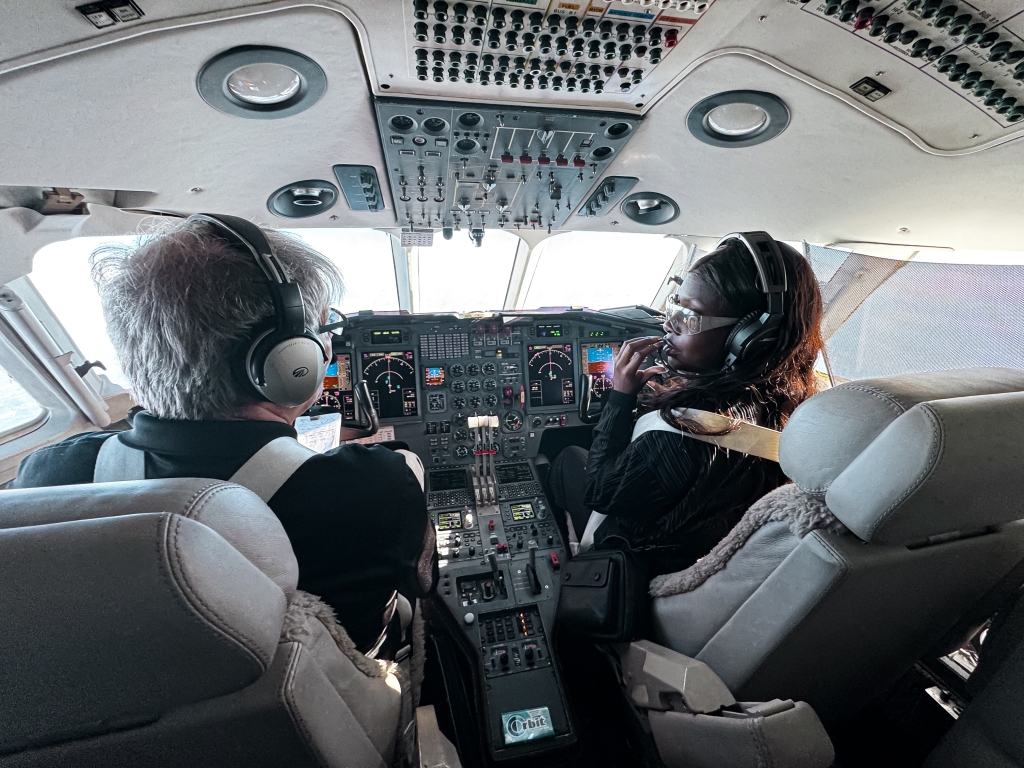
Nicky: I’m certified to fly both single-engine and multi-engine aircraft commercially. Since I train students, most of my experience is in training aircraft like Pipers and Cessnas. That said, I’ve also flown jets. My favorite so far? The Falcon 7X, which I flew up to 40,000 feet.
Can you share a moment when you felt particularly proud as a pilot?
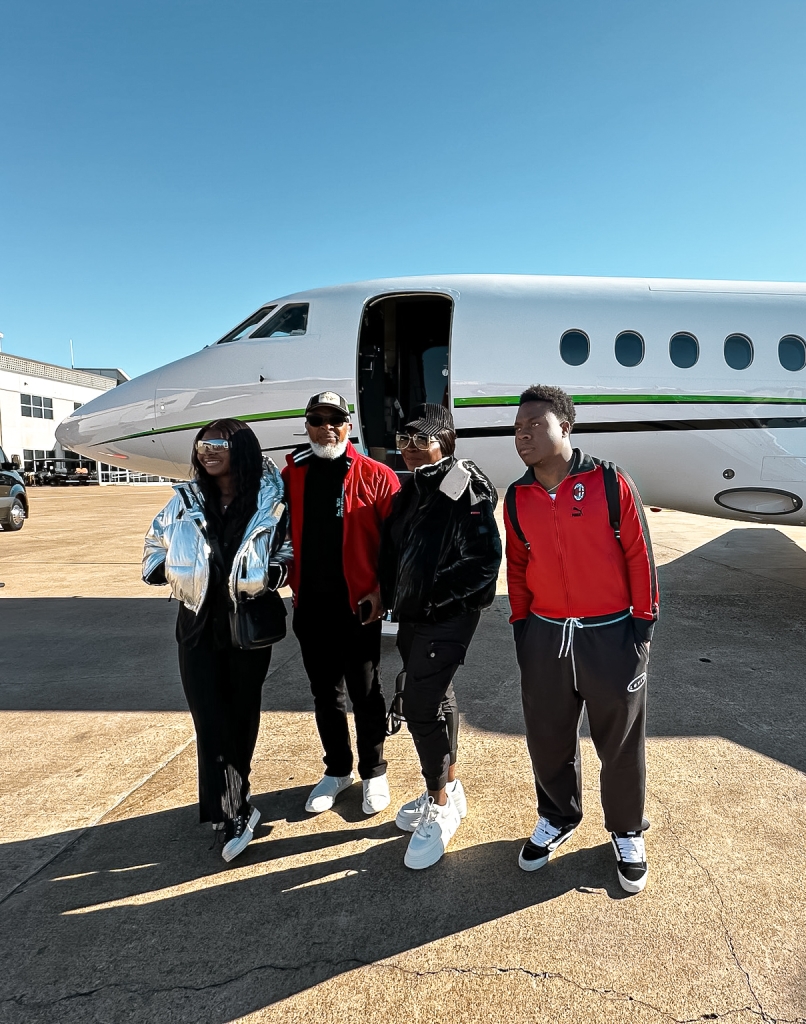
Nicky: My proudest moment was flying my entire family on a private jet to Universal Studios. The whole trip was a surprise orchestrated by my cousin, @kellyohgee, who’s a trailblazer in her own industry. She planned the trip to Orlando, and I got to fly the jet.
It was surreal—especially because it was something I had quietly prayed for months earlier.
Flying my whole family was such a full-circle, heartwarming moment. Also… the Nigerian food! I’m talking Egusi, Pounded Yam, and my favorite—fried plantain. Something about the altitude made that the sweetest plantain I’ve ever had!
How do you balance the demands of flying with your personal life?
Nicky: My weekdays are dedicated to my career, and weekends are for resetting and having fun.
Being a flight instructor is the hardest job in the pilot industry—and that’s not even coming from me. I’m quoting my student, Kevin, who is a retired American Airlines captain. Every day, I place my life in the hands of people learning to fly—and I have to keep calm, encouraging, and composed.
I’ve flown with everyone from first-time students to retired captains who forget how to land without autopilot. Some days start at 6 a.m., others end at 1 a.m.—so you can imagine how precious my rest time is. On weekends, I catch up on chores, explore Dallas, play social sports, attend church, and spend time with family.

What are some of the advantages of being a pilot?
Nicky: First and foremost—the love of flying. Sometimes I work 12-hour shifts and don’t even feel it because I’m so mesmerized by the views.
Second, it’s a lucrative long-term career. The pay increases significantly with each year of experience. As part of United Airlines’ Aviate Program, I often visit their Flight Training Center in Denver—and it’s inspiring to see how highly decorated their pilots are. Other perks include travel benefits, status, and of course, the adrenaline rush. But the bottom line? Most pilots love their job so much, they do it until the FAA forces them to retire at 65.
Lastly, what is the 3-to-1 rule for pilots?
Nicky: The “3-to-1 rule” is a rule of thumb pilots use to calculate when to begin descending for landing. It says that you need 3 nautical miles to descend 1,000 feet. So, if you need to descend from 10,000 feet, you should start your descent approximately 30 nautical miles from your destination. It’s not an exact science—just a rough estimate that instructors often teach student pilots to help them plan cross-country flights.