
A fresh wind is blowing across South Africa’s political and socio-economic landscape one that signals not just reflection, but an intention to reset the national trajectory. At the heart of this shift lies the newly launched National Dialogue, a people-centred initiative that may well become a cornerstone of South Africa’s future governance model.
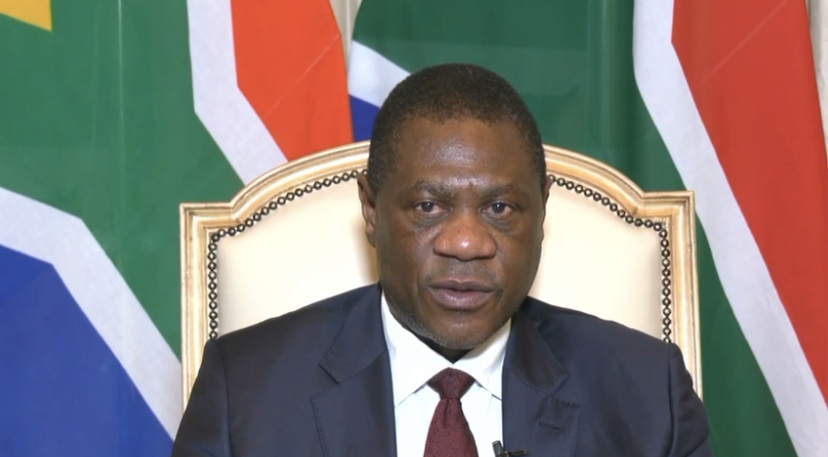
Announced formally during the 30th Annual National Economic Development and Labour Council (NEDLAC) Summit, Deputy President Shipokosa Paulus Mashatile positioned the Dialogue as more than just a ceremonial exercise. Instead, it is being framed as an opportunity to create a new social contract a compact between citizens, institutions, and sectors that could redefine the South African project beyond 2030.
“The National Dialogue is not a side conversation it’s the main table. It’s where the future of South Africa is being negotiated, with all of us seated equally,” said Mashatile, underscoring the inclusive vision behind the initiative.
Held at the University of South Africa (UNISA) from 15–16 August, the First Convention of the National Dialogue convened delegates from government, business, labour, civil society, and academic institutions a rare alignment of voices often siloed by sectoral interests. The symbolism of the venue, UNISA an institution rooted in access to education and ideas was not lost on attendees.
But unlike previous dialogues or summits, this one carries a longer lens: it asks what South Africa wants to be after 2030, a year often cited in policy frameworks as a milestone for developmental goals. In doing so, it implicitly acknowledges that while progress has been made since the advent of democracy, many promises remain unfulfilled.
Mashatile challenged delegates not to treat the dialogue as a one-off event. Over the next several months, South Africans will be expected to engage deeply in localised and sector-specific dialogues that feed into a national consensus document. This could shape policy, budgeting, education, land reform, labour laws, and even questions of identity and justice.
The reference to the Freedom Charter with its famous declaration that “South Africa belongs to all who live in it, Black and white” wasn’t merely rhetorical. It signalled a return to foundational principles at a time when inequality, mistrust, and economic stagnation threaten to erode democratic gains.
Observers say this dialogue process could become South Africa’s most significant social-political moment since the early 1990s, when Codesa negotiations laid the groundwork for constitutional democracy.
This year’s NEDLAC Summit, convened under the theme “Advancing Solidarity, Equality, and Sustainability in the Economy and Labour Market”, further underscored the urgency of interlinking political consensus with economic reform. As the country continues to battle youth unemployment, slow growth, and an increasingly informal economy, the call for a “people’s economy” echoed through plenary rooms and panel discussions.
What made this year’s summit notable was its alignment with the National Dialogue suggesting a broader convergence of policy and people, rhetoric and reform. Analysts believe this synthesis could produce actionable strategies that don’t just remain on paper but live in the experiences of ordinary citizens.
While the mood is cautiously optimistic, the next phase of the Dialogue will be the real test. Will citizens feel genuinely heard? Can civil society keep government accountable? Will business take up a meaningful role, or simply observe from the sidelines?
The coming months will reveal whether the National Dialogue is the start of a new era or just another chapter in a well-worn book of promises.
If successful, the initiative could be remembered not just as a reaction to frustration but as the ignition of a generational recalibration.