
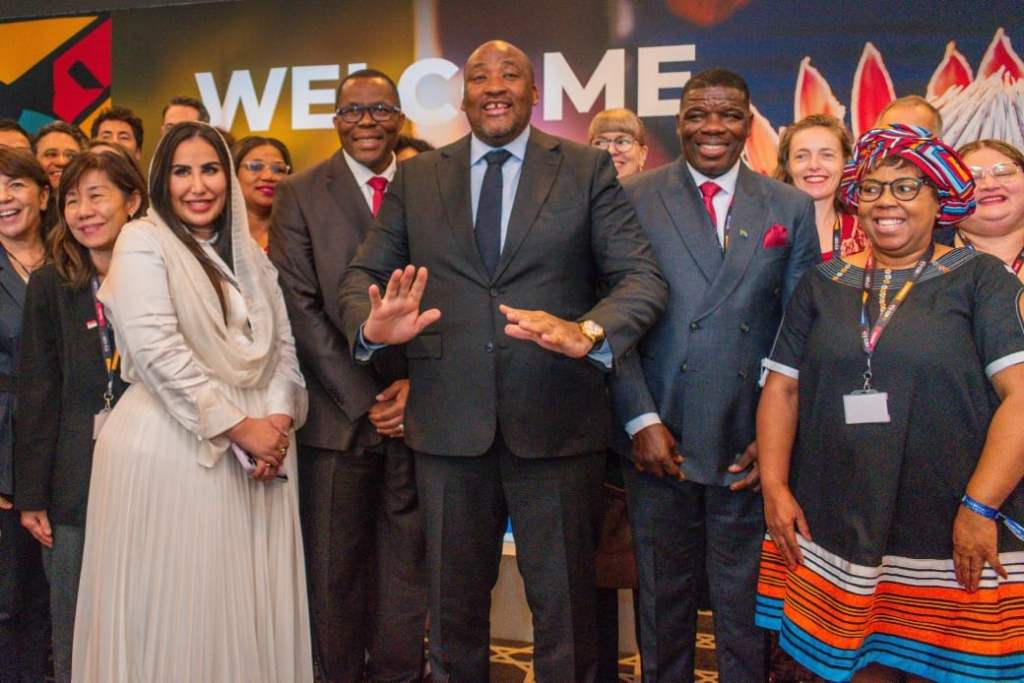
KwaZulu-Natal recently took centre stage on the global cultural calendar as the province hosted the G20 Culture Ministers’ Meeting at the Durban International Convention Centre. The opening session, held a few days ago, saw MEC for Arts and Culture, Mntomuhle Khawula, extend a warm welcome to international delegates, positioning KwaZulu-Natal as a gateway for cultural exchange, innovation and sustainable development.
In his address, MEC Khawula said it was an honour to host such a distinguished gathering of cultural leaders on behalf of the people and government of KwaZulu-Natal. He described the province as “a living tapestry of cultures that converge to tell the South African story, one of resilience, creativity and strength.”
Khawula highlighted KwaZulu-Natal’s proud identity as “The Kingdom of the Zulu,” where heritage and modern innovation coexist. He pointed to the statue of King Shaka at King Shaka International Airport as a symbol of unity, strategy and vision.
The MEC commended the Minister of Sport, Arts and Culture, Hon. Gayton McKenzie, for choosing KwaZulu-Natal as the host province for this year’s G20 cultural dialogue. “This platform allows us to elevate cultural heritage and creativity as central pillars of the world’s development agenda,” he said.
Khawula noted that the creative and cultural industries are among the fastest-growing sectors of the global economy, contributing significantly to GDP and creating millions of jobs particularly for young people. For South Africa and KwaZulu-Natal in particular, he said, these industries represent “a new frontier of inclusive and sustainable economic opportunity.”
He also outlined the province’s efforts to develop cultural and heritage tourism not only as a means of preserving history but also as a way of transforming heritage into opportunity. From the Valley of the Zulu Kings and the Drakensberg Mountains to the Ohlange Institute and Sibhudu Cave, Khawula said these sites are being reimagined as “centres of learning, innovation and sustainable tourism.”
The MEC placed strong emphasis on Africa’s role in global trade and collaboration, pointing to the African Continental Free Trade Area as a key opportunity to strengthen partnerships. “Africa is rich not only in resources but in culture, creativity and intellect,” he said, referencing historic institutions like the University of Timbuktu, Fort Hare University and Adams College where leaders such as Nelson Mandela, Joshua Nkomo and Prince Mangosuthu Buthelezi once studied.
Looking ahead, Khawula urged delegates to advocate for fair trade, inclusivity and innovation within the global cultural economy. He called for policies that ensure mutual benefit, emphasising that “Africa stands ready to be the perfect equal trade destination.”
Khawula also addressed the impact of artificial intelligence on the creative sector, highlighting the need to protect intellectual property and moral rights while embracing innovation. “AI brings both opportunity and complexity but with collaboration, we can turn challenges into new frontiers,” he said.
Concluding his address, the MEC reaffirmed KwaZulu-Natal’s commitment to global cultural cooperation. “Let us build bridges between nations through art, innovationa nd shared heritage,” he said. “When we invest in creativity, we invest in peace, in progress and in people.”