
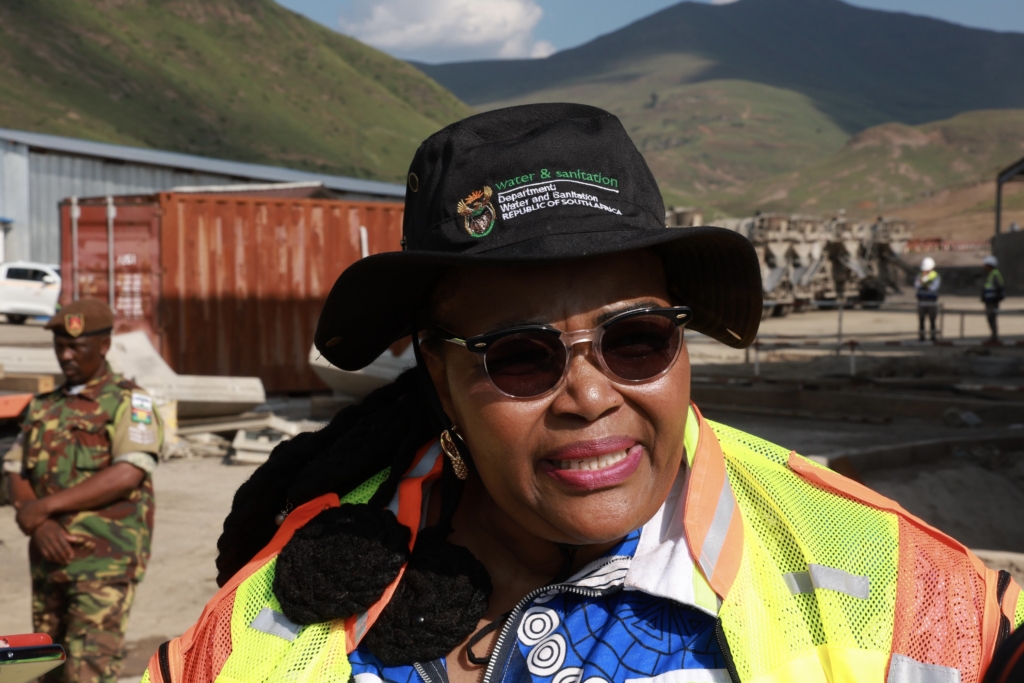
Minister of Water and Sanitation, Pemmy Majodina, alongside Deputy Minister of Planning Monitoring and Evaluation, Mr Seiso Mohai as well as South Africa’s High Commissioner for Lesotho, Constance Sapasengwi will lead a South African delegation on an oversight visit to the Lesotho Highlands Water Project (LHWP) Phase II. The delegation will engage with Lesotho’s Minister of Natural Resources, Mr Mohlomi Moleko, to assess progress on this strategically important bi-national infrastructure project.
The visit will include representatives from the Lesotho Highlands Water Commission, which oversees the project on behalf of both countries, as well as officials from the Lesotho Highlands Development Authority (LHDA), the implementing agency. The delegation will conduct site visits to key components of Phase II, including the Polihali Dam construction site, the Katse Dam Outfall Tunnel system, the Senqu Bridge and other associated infrastructure.
In addition to site inspections, Minister Majodina will lead high-level consultation meetings aimed at reviewing project milestones, addressing implementation challenges and reinforcing collaborative efforts to ensure the project’s successful delivery. The Lesotho Highlands Water Project remains a landmark initiative that not only enhances water security but also continues to strengthen bilateral relations between the Republic of South Africa and the Kingdom of Lesotho.
The LHWP is a flagship bi-national infrastructure programme and a key priority of the South African government. It entails the construction of an extensive network of dams and tunnels designed to transfer water from the Orange–Senqu River in the Lesotho highlands to South Africa while simultaneously supporting hydroelectric power generation in Lesotho.
Phase II of the project includes the construction of an approximately 165-metre-high concrete-faced Rockfill Dam at Polihali located downstream of the confluence of the Khubelu and Senqu–Orange Rivers. This will be complemented by an approximately 38-kilometre-long concrete-lined gravity tunnel linking the Polihali Reservoir to the Katse Reservoir.
Upon completion, Phase II will significantly increase water transfers from the Kingdom of Lesotho to the Republic of South Africa by an additional 490 million cubic metres per year. This will raise the total annual transfer from the current 780 million cubic metres to approximately 1 260 million cubic metres supplying the Integrated Vaal River System and contributing to long-term water security for the region.
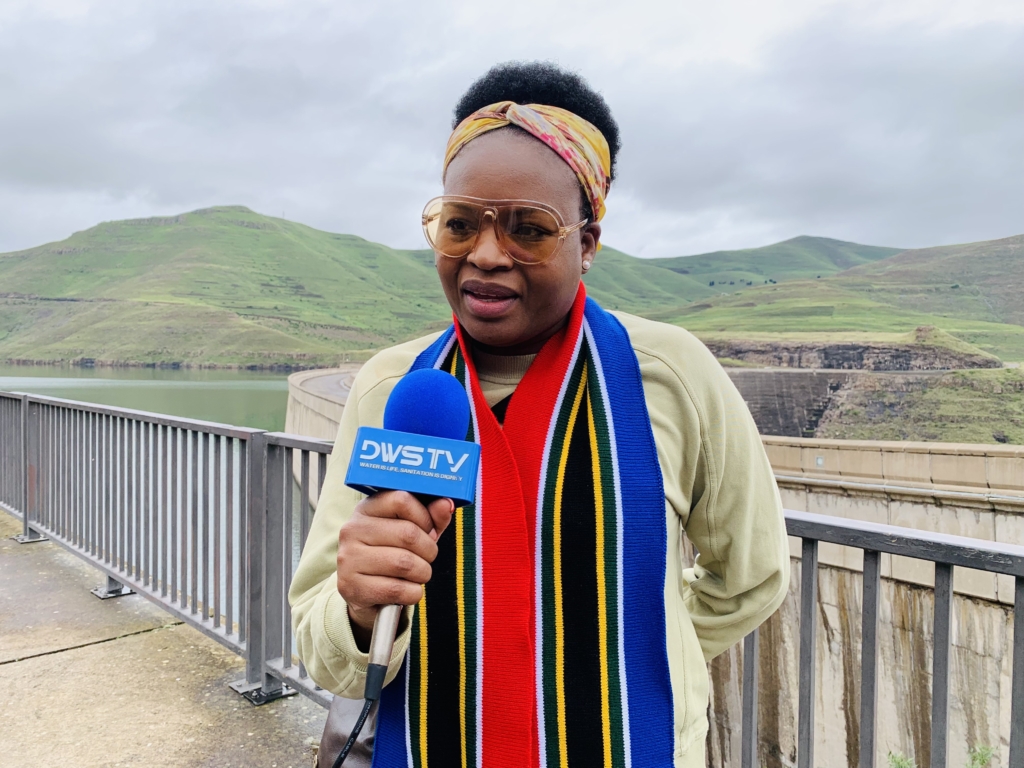
The Department of Water and Sanitation (DWS) spokesperson Wisani Mavasa, who led members of the media on a guided visit to key site areas, said the project forms a critical part of South Africa’s long-term water resource strategy. She explained that the development is designed to strengthen the country’s ability to meet its constitutional obligation to ensure access to water for all, while securing sustainable and reliable supply for current and future generations. According to Mavasa, the project not only provides long-term water security but also offers assurance of delivery by improving system resilience, supporting economic development and safeguarding water availability in the face of growing demand and climate-related pressures. She emphasised that such strategic investments are essential to building a water-secure nation and ensuring that communities, industry and the broader economy continue to benefit from dependable water resources.